K-Drama Viewership in U.S. Forecast to Grow 15% by Late 2026

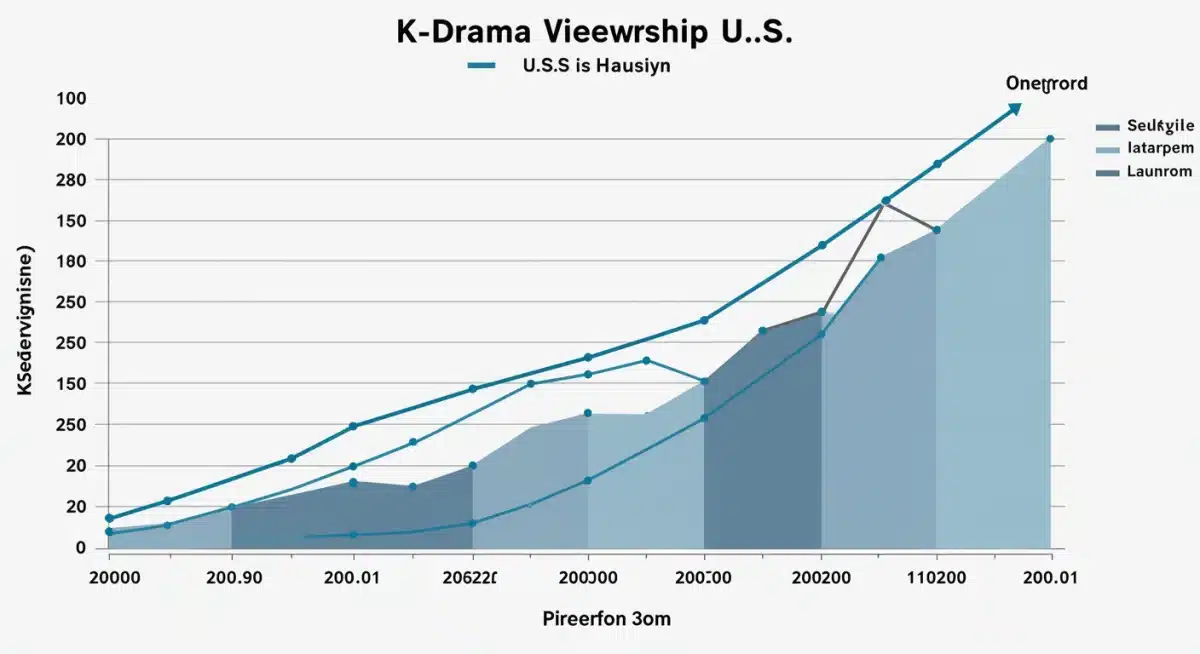
Industry Forecast: K-Drama Viewership in the U.S. Projected to Grow 15% by Late 2026 Amidst New Platform Launches indicates a substantial expansion of the Korean drama market, fueled by strategic content distribution and increasing audience engagement. This growth reflects a significant shift in American entertainment consumption patterns.
The landscape of American entertainment is undergoing a fascinating transformation, with global content increasingly capturing the hearts of U.S. audiences. A key player in this shift is the Korean drama phenomenon, and the latest Industry Forecast: K-Drama Viewership in the U.S. Projected to Grow 15% by Late 2026 Amidst New Platform Launches underscores this undeniable trend. This isn’t just a fleeting trend; it’s a profound cultural integration, signaling a robust future for K-Dramas across the nation.
The Meteoric Rise of K-Dramas in the American Market
The journey of K-Dramas from niche interest to mainstream sensation in the U.S. has been nothing short of remarkable. What began as a cult following has blossomed into a significant cultural force, influencing fashion, music, and storytelling across the country. This section delves into the foundational elements contributing to this explosive growth.
Early adoption by dedicated fans paved the way for broader acceptance, driven by word-of-mouth and the accessibility offered by early streaming platforms. These initial inroads were crucial in building a loyal audience base.
Expanding Accessibility and Content Diversity
One of the primary catalysts for this surge is the ever-increasing accessibility of K-Dramas. With more streaming services adding Korean titles to their libraries, viewers have unprecedented access to a vast array of genres and narratives. This expanded reach has been instrumental in captivating new demographics.
- Netflix’s Global Strategy: Netflix has heavily invested in K-Drama production and licensing, making titles like ‘Squid Game’ and ‘Extraordinary Attorney Woo’ global sensations.
- Dedicated Streaming Services: Platforms like Viki and Kocowa continue to cater specifically to K-Drama enthusiasts, offering extensive back catalogs and swift subtitling.
- Mainstream Integration: Other major platforms are now recognizing the value, integrating K-Dramas into their main content offerings, further normalizing their presence.
The sheer diversity of K-Drama genres also plays a crucial role. From romantic comedies and historical epics to gripping thrillers and fantasy series, there’s truly something for everyone. This variety ensures that K-Dramas can appeal to a wide spectrum of tastes, preventing viewer fatigue and continuously drawing in new fans. The quality of storytelling, often characterized by intricate plots and strong character development, resonates deeply with audiences seeking fresh narratives.
The growth isn’t just about quantity but also about quality. Korean production companies are renowned for their high production values, compelling scripts, and talented casts. This commitment to excellence ensures that K-Dramas stand out in a crowded entertainment market. As more platforms compete for exclusive content, the investment in K-Drama production is likely to continue, further enhancing their appeal and driving viewership numbers upwards. This trend is a clear indicator of a maturing market with sustained interest.
New Platform Launches: A Game Changer for K-Drama Distribution
The projection of a 15% growth in K-Drama viewership by late 2026 is heavily reliant on the strategic expansion of distribution channels. New platform launches, alongside existing services bolstering their K-Drama catalogs, are creating an unprecedented ecosystem for Korean content consumption in the U.S. These developments are not merely additive; they are transformative.
These platforms often come equipped with advanced recommendation algorithms and user-friendly interfaces, making discovery easier for both seasoned fans and newcomers. This technological edge contributes significantly to viewer retention and engagement.
Strategic Alliances and Content Acquisition
The recent past has seen a flurry of activity in the streaming world, with major players forging alliances and acquiring rights to highly anticipated K-Drama titles. This competitive environment benefits viewers by ensuring a steady stream of fresh and exclusive content.
- Partnerships with Korean Studios: U.S. platforms are increasingly partnering directly with leading Korean production houses to co-produce or secure first-run rights.
- Localized Content Strategies: Some platforms are experimenting with localized content strategies, offering K-Dramas with specific appeal to American audiences, sometimes even with English dubbing options.
- Bundling Services: The emergence of bundled streaming packages that include K-Drama heavy platforms makes access more convenient and cost-effective for consumers.
These new platforms are not just repositories of content; they are actively shaping viewer habits. By investing in marketing and promotion tailored to the U.S. audience, they are effectively expanding the reach and appeal of K-Dramas beyond traditional fan bases. The convenience of accessing a vast library of content through a single subscription is a powerful draw, encouraging exploration and sustained engagement. This concentrated effort from multiple fronts is a key driver for the projected growth.
Furthermore, the data collected by these new platforms provides invaluable insights into viewer preferences, allowing for more targeted content acquisition and personalized recommendations. This data-driven approach ensures that the content offered remains relevant and engaging, fostering a continuous cycle of interest and viewership. The synergy between content providers and distribution platforms is creating a virtuous circle that will undoubtedly propel K-Drama viewership to new heights.
Demographic Shifts: Who is Watching K-Dramas in the U.S.?
Understanding the demographic landscape of K-Drama viewers in the U.S. is crucial for comprehending the projected growth. What started as a phenomenon primarily embraced by Asian-American communities and young women has evolved into a much broader appeal, crossing age, gender, and ethnic lines. This expanding audience base is a testament to the universal themes and high production quality of Korean dramas.
The initial appeal was often rooted in cultural connection or the novelty of different storytelling. However, as K-Dramas became more accessible, their intrinsic qualities began to attract a diverse viewership.
Broadening Appeal Across Generations and Backgrounds
Recent studies indicate a significant diversification in the K-Drama audience. While younger demographics remain a core segment, there’s a noticeable increase in viewership among older age groups and individuals from non-Asian backgrounds. This broadening appeal signals a maturation of the market.
- Gen Z and Millennials: These groups continue to be primary drivers, often introduced to K-Dramas through social media and peer recommendations.
- Increased Male Viewership: Genres like action, thrillers, and historical dramas have successfully attracted a growing male audience.
- Ethnic Diversity: Beyond Asian-American communities, Hispanic, Black, and White audiences are increasingly engaging with K-Drama content.
The themes explored in K-Dramas often transcend cultural boundaries, dealing with universal human experiences such as love, family, ambition, and social justice. This universality, combined with fresh narrative approaches, makes them resonate with a wide array of viewers. The emotional depth and character-driven plots offer a compelling alternative to much of Western television. This emotional connection is a powerful factor in fostering loyalty and encouraging new viewers.
The social aspect also plays a role, with K-Dramas becoming a topic of discussion in online communities and social gatherings. This shared experience further cements their place in popular culture. As more diverse groups discover the richness of Korean storytelling, the K-Drama viewership growth will naturally accelerate, contributing significantly to the 15% forecast by late 2026.
The Impact of Social Media and Fan Communities
In the digital age, the role of social media and vibrant online communities cannot be overstated in driving cultural phenomena. For K-Dramas, these platforms have been indispensable in fostering engagement, spreading awareness, and creating a sense of shared experience among fans. This organic, grassroots promotion is a powerful engine behind the projected viewership growth.
Social media acts as a central hub for discussions, fan theories, and real-time reactions, amplifying the excitement around new releases and popular series. This constant buzz keeps K-Dramas at the forefront of cultural conversations.
From Hashtags to Global Trends
Social media platforms like Twitter, TikTok, and Instagram are teeming with K-Drama content, from fan edits and memes to in-depth analyses and live watch parties. These interactions create a dynamic environment that encourages discovery and sustained interest.
- TikTok’s Influence: Short-form video clips showcasing iconic K-Drama moments or character arcs have introduced countless new viewers to the genre.
- Twitter Discussions: Hashtags related to K-Dramas frequently trend globally, indicating widespread engagement and discussion.
- Fan-Created Content: Art, fan fiction, and music inspired by K-Dramas further deepen engagement and foster a strong sense of community.
Beyond casual interactions, dedicated fan communities on platforms like Reddit, Discord, and specialized forums provide spaces for in-depth discussions, recommendations, and mutual support. These communities are vital for retaining viewers and converting casual watchers into passionate advocates. The shared experience of watching and discussing K-Dramas creates a powerful bond among fans, which in turn fuels further interest and viewership.
Influencers and content creators also play a significant role, reviewing new series, explaining cultural nuances, and recommending hidden gems. Their endorsements carry considerable weight and often lead to spikes in viewership for particular titles. This powerful combination of organic fan engagement and strategic influencer marketing creates a self-sustaining ecosystem that continually draws new audiences into the world of K-Dramas, directly contributing to the projected 15% K-Drama viewership growth.
Economic Implications and Investment in K-Content
The burgeoning popularity of K-Dramas in the U.S. is not just a cultural phenomenon; it carries significant economic implications, driving investment and shaping the entertainment industry. The projected 15% growth in viewership by late 2026 signals a lucrative market that is attracting substantial capital and fostering strategic partnerships. This economic momentum reinforces the long-term viability of K-Content.
Increased viewership translates directly into higher advertising revenues, subscription numbers, and licensing deals, creating a robust financial ecosystem around K-Dramas.
Growing Investment and Production Budgets
As the demand for K-Dramas escalates, so does the investment in their production. Korean production companies, often backed by major conglomerates, are now producing content with budgets that rival Hollywood productions, leading to even higher quality and more ambitious storytelling.
- Increased Production Values: Larger budgets allow for cinematic quality, stunning visuals, and complex special effects, elevating the viewer experience.
- Talent Development: Investment extends to nurturing new talent, including writers, directors, and actors, ensuring a continuous supply of high-caliber professionals.
- International Co-productions: There’s a growing trend towards co-production deals between Korean and international studios, sharing costs and expanding global reach.
The economic impact extends beyond direct production. The popularity of K-Dramas boosts interest in other facets of Korean culture, including K-Pop, fashion, beauty products, and tourism. This creates a synergistic effect, where each element reinforces the others, leading to a broader economic benefit. U.S. streaming platforms and broadcasters are keenly aware of this potential, leading to competitive bidding for exclusive rights and original content.
This increased financial commitment ensures that the quality and innovation that define K-Dramas will continue, making them an attractive proposition for both viewers and investors. The sustained economic interest is a strong indicator that the projected K-Drama viewership growth is not only achievable but likely to be surpassed, solidifying K-Dramas as a permanent fixture in the global entertainment landscape.
Challenges and Opportunities for Sustained Growth
While the forecast for K-Drama viewership in the U.S. is overwhelmingly positive, projecting a 15% growth by late 2026, it’s essential to acknowledge the challenges that lie ahead and the opportunities they present for sustained expansion. Navigating these complexities will be key to maintaining momentum and ensuring long-term success in a highly competitive entertainment market.
The landscape of streaming and content consumption is constantly evolving, requiring adaptability and strategic foresight from all stakeholders involved in K-Drama distribution.
Overcoming Market Saturation and Cultural Nuances
One primary challenge is the potential for market saturation. As more content becomes available, standing out and retaining viewer attention becomes increasingly difficult. Furthermore, bridging cultural nuances for a diverse American audience requires careful consideration.
- Content Differentiation: Platforms must focus on offering unique and high-quality content that differentiates itself from competitors.
- Localization Efforts: While subtitles are standard, exploring more nuanced localization, including cultural explanations or alternative dubbing options, could enhance accessibility.
- Preventing Burnout: The sheer volume of new releases could lead to viewer fatigue; strategic scheduling and promotion are crucial.
However, these challenges also open doors for significant opportunities. The increasing sophistication of AI-driven recommendation systems can help viewers discover content tailored to their specific tastes, even within a vast library. Furthermore, deeper collaborations between Korean and American creative teams could lead to innovative hybrid productions that blend cultural elements, appealing to an even broader audience.
The opportunity to leverage the existing fan base for user-generated content and community-driven marketing remains immense. Empowering fans to be ambassadors for K-Dramas can create incredibly effective and authentic promotional campaigns. By addressing challenges proactively and capitalizing on opportunities, the industry can ensure that the K-Drama viewership growth continues its upward trajectory, solidifying its place in the U.S. entertainment market for years to come.
The Future Landscape: Beyond 2026 and New Trends
Looking beyond the immediate forecast of a 15% growth in K-Drama viewership by late 2026, the future landscape promises even more dynamic shifts and exciting innovations. The groundwork laid by new platform launches and increasing audience engagement is setting the stage for a new era of global entertainment consumption, with K-Dramas at the forefront. Anticipating these future trends is crucial for stakeholders and fans alike.
The evolution of technology, combined with changing viewer preferences, will undoubtedly shape how K-Dramas are consumed and produced in the years to come, pushing boundaries and fostering new forms of engagement.
Emerging Technologies and Interactive Storytelling
The integration of emerging technologies like virtual reality (VR), augmented reality (AR), and even interactive storytelling elements could revolutionize the K-Drama viewing experience. Imagine stepping into a drama or making choices that influence the plot.
- VR/AR Experiences: Complementary VR/AR content could offer immersive experiences, allowing fans to explore drama sets or interact with characters.
- Interactive Narratives: Though still nascent, interactive K-Dramas could provide personalized viewing experiences, increasing engagement and replayability.
- Metaverse Integration: K-Drama themed metaverse spaces could offer new avenues for fan interaction, merchandise sales, and virtual events.
Content creators are also likely to experiment with shorter-form content designed specifically for mobile consumption and social media, catering to the habits of younger audiences. This could include spin-off web series, character-focused shorts, or even interactive games based on popular K-Dramas. The fusion of gaming and storytelling presents a particularly potent opportunity for engaging a new generation of viewers.
Furthermore, the global success of K-Dramas will likely inspire other non-English language content to gain similar traction in the U.S., fostering a truly diverse international entertainment market. The precedent set by K-Drama viewership growth demonstrates that quality storytelling knows no linguistic or cultural bounds. The industry is poised for continued innovation, ensuring K-Dramas remain a captivating and influential force well into the future.
| Key Point | Brief Description |
|---|---|
| 15% Growth Forecast | K-Drama viewership in the U.S. is projected to grow by 15% by late 2026. |
| New Platform Launches | Strategic platform expansions and increased content acquisition are key growth drivers. |
| Diversifying Demographics | Audience base is broadening across age, gender, and ethnic groups in the U.S. |
| Social Media Influence | Fan communities and platforms like TikTok drive significant awareness and engagement. |
Frequently Asked Questions About K-Drama Viewership Growth
The industry forecast indicates that K-Drama viewership in the U.S. is projected to grow by 15% by late 2026. This significant increase highlights the genre’s expanding popularity and market presence across American audiences, driven by various factors discussed in the article.
Key factors include the launch of new streaming platforms, increased investment in K-Drama production, diversified content offerings, and the powerful influence of social media and dedicated fan communities. These elements combine to enhance accessibility and engagement for U.S. viewers.
Yes, many new and existing streaming platforms are strategically investing in acquiring and producing K-Drama content. They recognize the genre’s growing appeal and are actively expanding their libraries to attract and retain a dedicated audience, contributing significantly to market expansion.
While historically popular with Asian-American communities and younger women, K-Drama viewership is now broadening. It’s increasingly attracting diverse age groups, genders, and ethnic backgrounds, reflecting a universal appeal that transcends traditional demographic boundaries.
The sustained growth of K-Dramas suggests a permanent shift towards more diverse, global content consumption in the U.S. It encourages further international co-productions, increased investment in non-English language content, and fosters a richer, more varied entertainment landscape for all viewers.
Conclusion
The projected 15% growth in K-Drama viewership in the U.S. by late 2026 is more than just a statistic; it represents a profound evolution in American entertainment consumption. Driven by new platform launches, a diversifying audience, the undeniable power of social media, and significant economic investment, K-Dramas have firmly established themselves as a major cultural force. As the industry continues to innovate and adapt, the future promises even greater integration of Korean storytelling into the global entertainment tapestry, offering rich narratives and diverse perspectives that resonate deeply with audiences across the nation.