K-Drama Tech Innovations: U.S. Content Delivery in 2026
By 2026, technological innovations driving K-drama content delivery in the U.S. are fundamentally transforming how audiences access and experience their favorite shows, fueled by advancements in AI, streaming infrastructure, and immersive technologies.
Have you ever wondered how your favorite K-drama seamlessly lands on your screen, perfectly subtitled and ready for a binge-watching session? The journey of K-drama from South Korea to American households is a complex, technologically advanced ballet, and by 2026, the landscape of Technological Innovations Driving K-Drama Content Delivery in the U.S. has become more sophisticated than ever. This article will delve into the cutting-edge advancements making K-dramas more accessible, engaging, and personalized for U.S. fans.
The Evolution of Streaming Platforms and Infrastructure
The backbone of K-drama delivery in the U.S. is undoubtedly its streaming infrastructure. What began as niche platforms has evolved into a robust ecosystem, integrating global content with localized experiences. By 2026, streaming services have significantly upgraded their underlying technologies to handle the immense demand for high-quality K-drama content.
These platforms are no longer just content repositories; they are sophisticated distribution networks designed for speed, reliability, and global reach. The shift towards cloud-native architectures has enabled unprecedented scalability, allowing services to rapidly expand their offerings and accommodate sudden surges in viewership, such as during the release of a highly anticipated K-drama.
Cloud-Native Architectures and Edge Computing
The move to cloud-native architectures has been a game-changer for K-drama streaming. This approach allows for flexible resource allocation and ensures consistent performance, even under peak loads.
- Scalability: Easily handles millions of concurrent viewers without degradation in service quality.
- Global Reach: Distributes content efficiently across diverse geographic regions, minimizing latency.
- Cost-Effectiveness: Optimizes operational expenditures by paying only for consumed resources.
Furthermore, edge computing is playing a vital role. By bringing content closer to the end-user, edge servers reduce buffering and improve video quality, especially in areas with less robust internet infrastructure. This ensures that a K-drama fan in a rural American town enjoys the same seamless viewing experience as someone in a major city.
Advanced Content Delivery Networks (CDNs)
Modern CDNs are crucial for optimizing K-drama delivery. These networks are strategically positioned globally to cache content, ensuring rapid access for viewers. The latest CDNs employ intelligent routing algorithms to direct user requests to the nearest and most efficient server.
- Reduced Latency: Content loads faster, minimizing wait times for viewers.
- Improved Reliability: Distributes traffic across multiple servers, preventing outages.
- Enhanced Security: Protects content from various cyber threats during transit.
The continuous development of these streaming platforms and their underlying infrastructure is paramount to meeting the ever-growing demand for K-drama content in the U.S., providing a stable and high-quality viewing experience for millions of fans.
AI and Machine Learning for Personalized Experiences
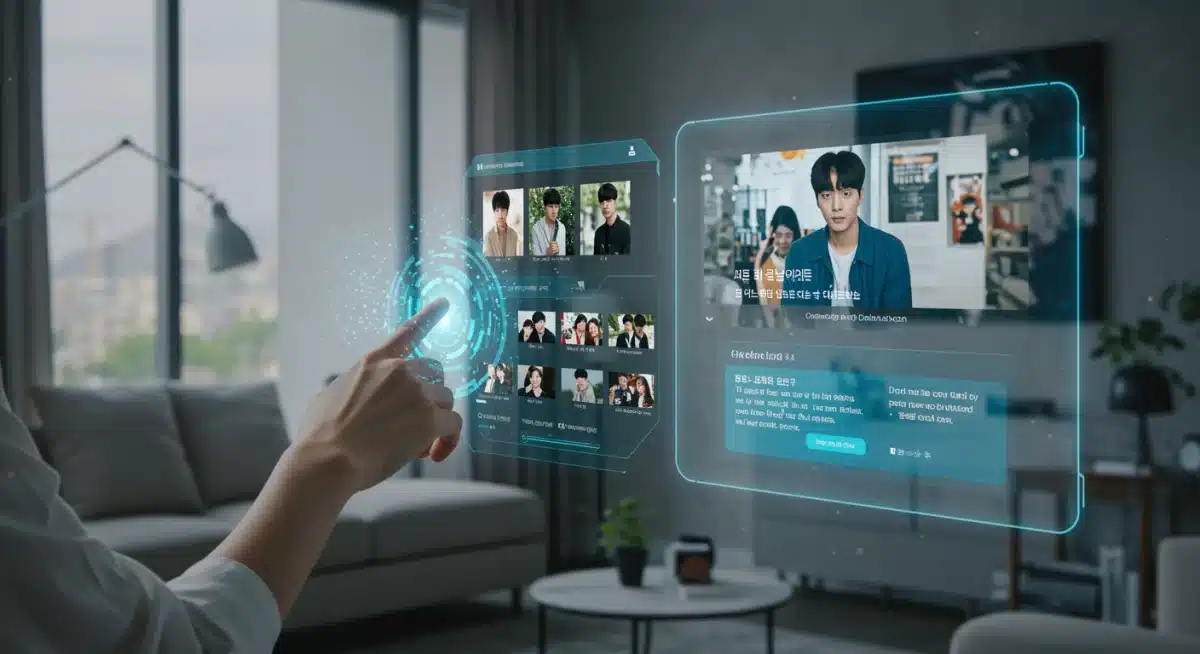
Artificial Intelligence (AI) and Machine Learning (ML) are at the forefront of personalizing the K-drama viewing experience. By 2026, these technologies have moved beyond simple recommendation engines, offering deeply customized interactions that cater to individual preferences and viewing habits.
AI algorithms analyze vast datasets, including viewing history, genre preferences, rewatch patterns, and even emotional responses captured through opt-in feedback. This allows platforms to not only suggest new K-dramas but also curate entire viewing journeys, ensuring fans discover content they genuinely love.
Smarter Recommendation Engines
Today’s recommendation engines are far more sophisticated. They consider not just what you’ve watched, but also the nuances of your viewing behavior.
- Contextual Recommendations: Suggests K-dramas based on time of day, current mood, or even local trending topics.
- Cross-Platform Integration: Recommends content across different streaming services you subscribe to, if permissions are granted.
- Predictive Analytics: Anticipates future preferences and introduces viewers to new genres or actors they might enjoy based on subtle patterns.
This level of personalization creates a more intimate and engaging relationship between the viewer and the content, making the discovery process an enjoyable part of the K-drama experience.
Dynamic Content Adaptation
AI also enables dynamic content adaptation. This means that elements of the K-drama experience can be subtly altered to enhance viewer engagement.
- Automated Subtitle Refinement: AI continually improves subtitle accuracy and cultural relevance, reducing human error.
- Personalized Marketing: Tailors promotions and trailers based on individual viewer profiles.
- Interactive Storytelling Elements: In some experimental formats, AI might even suggest alternative plot paths or character insights based on user interaction.
The integration of AI and ML is transforming K-drama consumption from a passive activity into an active, personalized journey, ensuring that each fan feels understood and catered to by their streaming platforms.
Enhanced Localization and Accessibility Features
For K-dramas to truly thrive in the U.S., effective localization and accessibility are paramount. By 2026, technological advancements have significantly bridged the language and cultural gap, making K-dramas more approachable for a wider American audience.
Gone are the days of clunky subtitles or poorly dubbed audio. Modern solutions leverage AI and advanced linguistic processing to deliver seamless and culturally accurate translations, ensuring that the original intent and emotional depth of the K-drama are preserved.
AI-Powered Translation and Dubbing
AI-driven translation goes beyond word-for-word interpretation. It understands context, idioms, and cultural nuances, producing more natural-sounding subtitles and dubs.
- Neural Machine Translation: Delivers highly accurate and contextually aware translations in real-time.
- Voice Synthesis and Cloning: Creates natural-sounding dubbed audio that matches character voices and emotions.
- Cultural Adaptation: Automatically adjusts references to resonate with American audiences without losing the original meaning.
This sophisticated approach ensures that U.S. viewers can fully immerse themselves in K-drama narratives, regardless of their proficiency in Korean, thereby expanding the market significantly.
Advanced Accessibility Features
Accessibility is no longer an afterthought; it’s an integral part of content delivery. Technologies now offer robust features for viewers with disabilities.
- Descriptive Audio: AI-generated narrations describe visual elements for visually impaired viewers.
- Customizable Subtitle Options: Users can adjust font size, color, background, and placement for optimal readability.
- Sign Language Integration: Some platforms experiment with AI-driven sign language interpreters appearing on-screen.
These enhancements not only broaden the appeal of K-dramas but also demonstrate a commitment to inclusive entertainment, making content accessible to everyone in the U.S.
The Rise of Interactive and Immersive Experiences
Beyond passive viewing, 2026 sees K-drama content delivery embracing interactive and immersive technologies. This shift transforms viewers into active participants, deepening their engagement with beloved stories and characters.
From choose-your-own-adventure narratives to virtual reality experiences that place fans directly into K-drama sets, technology is creating new dimensions of entertainment. This trend caters to a generation of viewers who expect more than just static content; they crave interaction and personalized journeys.
Web3 and Blockchain Integration
Web3 technologies, including blockchain and NFTs, are beginning to impact K-drama content distribution and fan engagement.
- Digital Collectibles (NFTs): Fans can own unique digital assets related to their favorite K-dramas, such as character art, behind-the-scenes footage, or virtual merchandise.
- Fan Tokenization: Some K-drama franchises offer fan tokens, granting holders exclusive access, voting rights on minor plot elements, or special events.
- Decentralized Content Ownership: Exploring models where creators and fans have more direct control over content distribution and monetization.
These innovations foster a stronger sense of community and ownership among K-drama fans, turning passive viewers into active stakeholders.
Virtual and Augmented Reality (VR/AR)
VR and AR offer unparalleled immersion, allowing fans to step into the world of their favorite K-dramas.
- Virtual Set Tours: Experience K-drama filming locations in 360-degree VR.
- AR Filters and Games: Interact with K-drama characters or elements in real-world environments through smartphone AR apps.
- Immersive Storytelling: Participate in supplementary narratives or mini-games set within the K-drama universe, enhancing the main plot.
These immersive experiences are still nascent but promise a future where K-drama consumption is a multi-sensory, interactive adventure, further solidifying its place in American pop culture.
Data Analytics and Content Strategy
The intelligent use of data analytics is fundamentally reshaping how K-drama content is acquired, produced, and marketed for the U.S. audience. By 2026, streaming platforms and production houses heavily rely on sophisticated data analysis to inform their content strategies, moving beyond gut feelings to data-driven decisions.
This involves analyzing not just viewership numbers, but also granular details like scene engagement, character popularity, completion rates, and even viewer sentiment across social media. The insights gained are invaluable for identifying trends, greenlighting new projects, and optimizing existing content.
Predictive Content Licensing
Data analytics now helps predict which K-dramas will resonate most with U.S. audiences before they are even licensed. This reduces risk and ensures a higher return on investment.
- Genre Trend Analysis: Identifies emerging popular genres or sub-genres within the K-drama landscape.
- Actor Performance Metrics: Evaluates the popularity and draw of specific actors across different regions.
- Audience Segmentation: Pinpoints specific U.S. demographic groups likely to engage with certain K-drama themes.
This predictive power allows platforms to curate a more targeted and appealing library for American viewers, maximizing engagement and subscription growth.
Optimized Marketing Campaigns
Data-driven insights are crucial for crafting highly effective marketing campaigns, ensuring K-dramas reach their intended audience.
- Personalized Ad Delivery: Targets specific viewer segments with K-drama promotions based on their viewing history and preferences.
- Optimal Release Scheduling: Determines the best time and day to release new episodes or entire seasons for maximum impact.
- Engagement Tracking: Monitors how audiences react to marketing materials and adjusts strategies in real-time.
The strategic application of data analytics ensures that K-drama content is not only delivered efficiently but also discovered and enjoyed by the broadest possible U.S. audience.
The Future of K-Drama Production and Distribution
Looking ahead, the technological innovations driving K-drama content delivery in the U.S. are not just about consumption but also about production and distribution models. By 2026, the entire content lifecycle is influenced by advanced tech, fostering greater efficiency, creativity, and global collaboration.
New production techniques, streamlined workflows, and innovative distribution channels are emerging, promising an even richer and more diverse array of K-dramas for American fans. This includes embracing virtual production, global co-productions, and direct-to-consumer models.
Virtual Production and AI in Creation
Virtual production, leveraging technologies like LED walls and game engines, is becoming more prevalent in K-drama creation.
- Cost Efficiency: Reduces the need for extensive location shoots and physical sets.
- Creative Flexibility: Allows for the creation of fantastical or historically accurate environments with greater ease.
- Real-time Visualization: Directors can see the final shot composition as they film, enhancing creative control.
AI is also assisting in scriptwriting, character development, and even generating visual effects, speeding up the production process and potentially opening new creative avenues.
Global Co-Productions and Direct-to-Consumer Models
The U.S. market is increasingly seeing K-drama co-productions, blending Korean storytelling with American production values and distribution networks.
- Hybrid Content: Produces K-dramas specifically tailored for a global audience, incorporating diverse talent and themes.
- Direct-to-Consumer (D2C): Some Korean production companies are exploring D2C models for niche content, building direct relationships with U.S. fans.
- Cross-Platform Synergy: K-dramas are increasingly designed to be consumed across multiple platforms, from traditional streaming to interactive apps and social media.
These trends indicate a future where K-drama production and distribution are more agile, globally integrated, and directly responsive to the demands of the U.S. market, promising an exciting era for fans.
Challenges and the Road Ahead
While technological innovations driving K-drama content delivery in the U.S. present immense opportunities, they also come with their share of challenges. The rapid pace of technological change, coupled with evolving consumer expectations and regulatory landscapes, requires continuous adaptation and strategic foresight from platforms and content creators alike.
Addressing these challenges is critical for maintaining K-drama’s growth trajectory and ensuring its long-term success in the competitive U.S. entertainment market. This includes issues related to cybersecurity, digital rights management, and the ethical implications of AI.
Cybersecurity and Content Protection
With increasing digital distribution comes a heightened risk of piracy and cyber threats. Protecting valuable K-drama content is a constant battle.
- Advanced DRM Solutions: Implementing sophisticated Digital Rights Management technologies to prevent unauthorized copying and distribution.
- Threat Detection: Utilizing AI and ML to identify and mitigate cyber threats in real-time.
- User Authentication: Enhancing security protocols for user accounts to prevent unauthorized access.
Ensuring content integrity and security is paramount to safeguarding the investments made in K-drama production and distribution.
Ethical AI and Data Privacy
The extensive use of AI and data analytics raises important ethical considerations regarding user privacy and algorithmic bias.
- Transparent Data Usage: Clearly communicating how user data is collected and utilized for personalization.
- Bias Mitigation: Developing AI algorithms that are fair and do not perpetuate existing biases in content recommendations.
- Regulatory Compliance: Adhering to evolving data privacy laws and regulations in the U.S., such as CCPA and potential federal frameworks.
Navigating these ethical and regulatory landscapes responsibly will be key to building trust with U.S. K-drama fans and fostering a sustainable growth environment for the industry.
| Key Innovation | Impact on K-Drama Delivery |
|---|---|
| AI & Machine Learning | Enables highly personalized recommendations and dynamic content adaptation for U.S. viewers. |
| Advanced Streaming Infrastructure | Ensures seamless, high-quality content delivery via cloud-native architectures and edge computing. |
| Immersive Technologies (VR/AR/Web3) | Offers interactive experiences, digital collectibles, and deeper fan engagement. |
| Enhanced Localization | Provides accurate AI-powered translations and dubbing, making K-dramas more accessible. |
Frequently Asked Questions About K-Drama Tech in the U.S.
AI is revolutionizing K-drama delivery by powering personalized recommendation engines, dynamically adapting content for viewer preferences, and improving subtitle accuracy. It analyzes viewing habits to curate unique experiences, making discovery more intuitive and engaging for U.S. fans.
Streaming platforms are crucial, serving as the primary conduit for K-drama content. They leverage advanced infrastructure like cloud-native architectures and CDNs to ensure high-quality, scalable, and reliable delivery, facilitating K-drama’s widespread accessibility across the U.S.
Yes, immersive technologies are emerging. VR offers virtual set tours, while AR allows interactive experiences with K-drama elements. Web3 integration, through NFTs and fan tokens, is also fostering deeper fan engagement and exploring new content ownership models, though still in early stages.
Technology significantly reduces language barriers through AI-powered translation and dubbing. Neural machine translation provides highly accurate, contextually aware subtitles, and advanced voice synthesis creates natural-sounding dubbed audio, ensuring U.S. viewers can fully enjoy K-dramas.
Future trends include increased reliance on virtual production techniques and AI in content creation for efficiency. Global co-productions are fostering hybrid content, and direct-to-consumer models are gaining traction, allowing for more targeted distribution and stronger fan connections in the U.S.
Conclusion
The landscape of Technological Innovations Driving K-Drama Content Delivery in the U.S. by 2026 is a dynamic and exciting realm. From the foundational advancements in streaming infrastructure and AI-driven personalization to the emerging frontiers of immersive experiences and data-informed content strategies, technology is continually reshaping how American audiences engage with K-dramas. While challenges like cybersecurity and ethical AI remain, the industry’s commitment to innovation promises an even more accessible, engaging, and diverse future for K-drama fans across the United States. The synergy between Korean creativity and global technological prowess ensures that K-dramas will continue to captivate and expand their devoted following.