U.S. K-Drama Distribution: 2 Key Mergers to Watch in Early 2026
Two significant mergers are expected to reshape the U.S. K-drama distribution landscape in early 2026, fundamentally altering content access and competitive dynamics for American viewers and industry stakeholders alike.
The world of Korean dramas, affectionately known as K-dramas, has captivated audiences globally, and the U.S. market is no exception. As this cultural phenomenon continues its meteoric rise, the business behind bringing these beloved stories to American screens is undergoing significant shifts. Specifically, the Consolidation in the U.S. K-Drama Distribution Landscape: 2 Key Mergers to Watch in Early 2026 are poised to redefine how fans access their favorite series and how the industry operates.
Understanding the Current K-Drama Distribution Ecosystem
The current landscape for K-drama distribution in the U.S. is a dynamic and multifaceted environment, characterized by a mix of global streaming giants, niche K-drama-specific platforms, and traditional broadcasters. This ecosystem has evolved rapidly over the past decade, driven by increasing demand and technological advancements.
Initially, K-dramas were often found on smaller, specialized platforms, catering to a dedicated fan base. However, as their popularity exploded, major players recognized their immense appeal, leading to a scramble for exclusive content rights and broader distribution.
Key Players and Their Strategies
- Global Streaming Services: Platforms like Netflix, Hulu, and Amazon Prime Video have heavily invested in K-drama content, either through exclusive licensing deals or co-production agreements. Their vast subscriber bases and marketing power have been instrumental in bringing K-dramas to a mainstream American audience.
- Specialized K-Drama Platforms: Services such as Viki and Kocowa continue to play a crucial role, offering extensive libraries, often with faster subtitling and community features that cater specifically to K-drama enthusiasts. These platforms have built strong loyalties within the core fandom.
- Traditional Broadcasters: Some traditional U.S. networks and their digital extensions also occasionally license or air K-dramas, though this is less common for new releases compared to streaming services.
Each of these players employs distinct strategies to attract and retain viewers. Global streamers leverage their existing infrastructure and marketing budgets, while specialized platforms focus on depth of content and community engagement. This competitive environment has, until now, offered a diverse range of options for consumers. However, the impending mergers suggest a potential shift towards a more consolidated market, which could have far-reaching implications for content availability and pricing.
The Impetus Behind Industry Consolidation
The drive towards consolidation in any industry is often rooted in a desire for increased market share, operational efficiencies, and enhanced competitive advantage. In the context of the U.S. K-drama distribution landscape, these factors are particularly relevant, alongside the unique pressures of the streaming wars and the global content arms race.
Companies are looking to streamline operations, reduce content acquisition costs, and build more robust subscriber bases. The high cost of licensing premium K-drama content, coupled with the intense competition for viewer attention, makes strategic mergers an attractive proposition for sustained growth and profitability.
Factors Fueling Merger Activities
- Escalating Content Costs: The demand for high-quality K-dramas has driven up licensing fees significantly. Mergers can create larger entities with greater bargaining power, potentially leading to more favorable deals with Korean production houses.
- Subscriber Acquisition and Retention: In a saturated streaming market, attracting new subscribers and preventing churn is paramount. A merged entity can offer a more extensive and diverse content library, making it a more compelling choice for consumers.
- Technological Integration: Combining technological infrastructures can lead to efficiencies in content delivery, user experience, and data analytics. This can result in a more seamless and personalized viewing experience for users.
- Global Market Expansion: For some entities, consolidation in the U.S. market might be part of a broader global strategy to enhance their footprint and competitive standing against other international media conglomerates.
These underlying forces suggest that the anticipated mergers are not merely opportunistic but are strategic moves designed to secure long-term viability and dominance in a rapidly evolving entertainment sector. The goal is to create platforms that are not just content providers, but comprehensive entertainment destinations capable of competing on a global scale.
Merger 1: A Deep Dive into “StreamGlobal Entertainment” and “K-Wave Connect”
The first significant merger on the horizon for early 2026 involves two prominent entities: StreamGlobal Entertainment, a major player with a broad catalog of international content, and K-Wave Connect, a highly respected platform known for its deep dive into Korean entertainment. This union is anticipated to create a formidable force in the U.S. K-drama distribution market.
StreamGlobal Entertainment, with its extensive technical infrastructure and marketing reach, has historically offered a wide array of foreign-language content, including a growing but not dominant K-drama selection. K-Wave Connect, on the other hand, boasts an impressive, curated collection of K-dramas, often securing rights to niche and critically acclaimed series, and has a very engaged, albeit smaller, subscriber base.
Strategic Rationale and Expected Synergies
- Content Library Expansion: The merger will immediately combine K-Wave Connect’s specialized K-drama catalog with StreamGlobal’s broader international offerings, creating a much more comprehensive library for subscribers.
- Enhanced Reach and Marketing: StreamGlobal’s established marketing channels and larger subscriber base will provide K-Wave Connect’s content with unprecedented exposure to a wider American audience.
- Operational Efficiencies: Integrating the back-end operations, content delivery networks, and customer support systems is expected to yield significant cost savings and improved service quality.
- Competitive Edge: This combined entity will be better positioned to compete with other streaming giants for exclusive K-drama rights, potentially outbidding smaller competitors and securing more premium content.
The synergy between StreamGlobal’s operational scale and K-Wave Connect’s content expertise is expected to create a powerful new platform. This merger will likely be viewed by investors and analysts as a strategic move to dominate the niche yet rapidly expanding K-drama segment within the broader U.S. streaming market. The integration process will be crucial, focusing on maintaining K-Wave Connect’s beloved community features while leveraging StreamGlobal’s technological prowess.
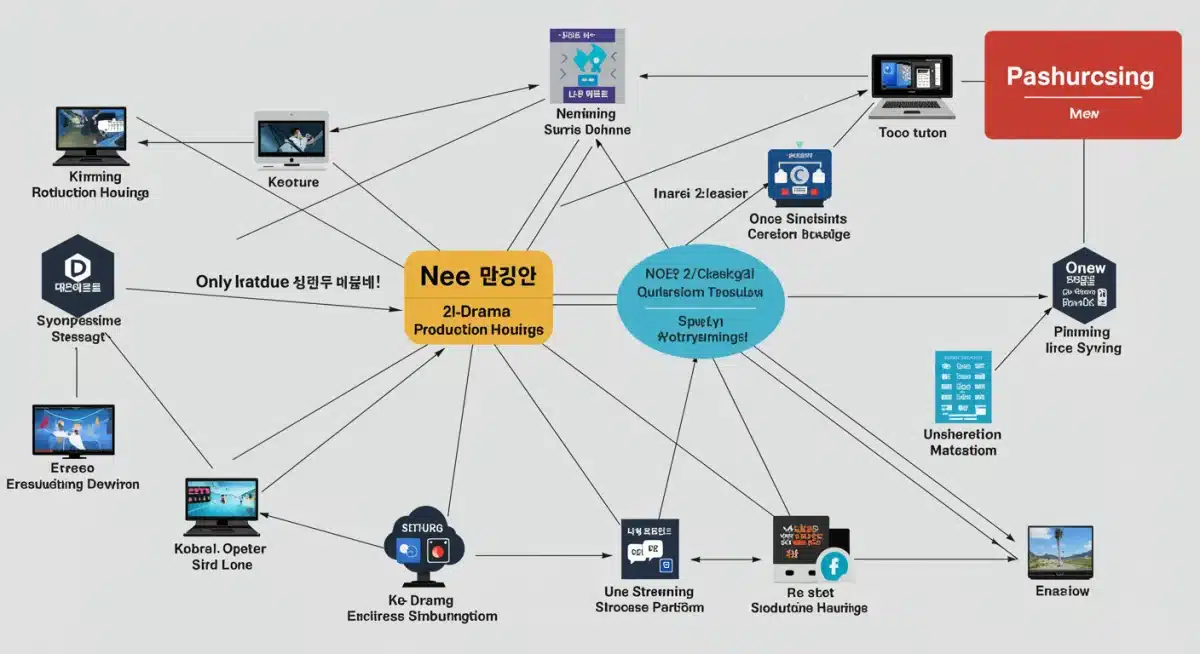
Merger 2: The Alliance of “DramaVerse” and “GlobalView Media”
The second pivotal merger expected in early 2026 involves DramaVerse, a rising star in digital content aggregation with a strong focus on Asian entertainment, and GlobalView Media, a well-established media conglomerate with significant content production capabilities and traditional distribution networks. This alliance represents a different strategic approach to market consolidation.
DramaVerse has made a name for itself through innovative content curation and a strong social media presence, attracting a younger demographic of K-drama fans. While it has licensed a considerable amount of K-drama content, its financial backing has been more limited. GlobalView Media, on the other hand, possesses deep pockets, extensive production studios, and existing relationships with major telecommunication providers, but has been slower to adapt to the digital-first K-drama consumption trend.
Strategic Rationale and Anticipated Outcomes
- Vertical Integration Opportunities: GlobalView Media’s production capabilities could be leveraged to create original K-drama content exclusively for DramaVerse, reducing reliance on external licensing. This could be a game-changer for content exclusivity.
- Cross-Platform Distribution: The merger could facilitate the distribution of DramaVerse’s digital content across GlobalView Media’s traditional broadcast and cable platforms, reaching an older, potentially untapped audience.
- Financial Stability and Investment: GlobalView Media’s financial strength will provide DramaVerse with the capital needed for aggressive content acquisition, technological upgrades, and international expansion, solidifying its market position.
- Diversification of Offerings: This merger could lead to a more diversified entertainment portfolio, combining streaming-native content with a broader range of media offerings, appealing to a wider demographic.
This merger signifies a convergence of new-age digital distribution with traditional media power. The challenge will be to successfully integrate DramaVerse’s agile, fan-centric approach with GlobalView Media’s corporate structure and legacy systems without alienating DramaVerse’s core audience. If successful, this alliance could create a hybrid media powerhouse capable of both producing and distributing K-dramas across multiple platforms, setting a new standard for content delivery in the U.S.
Potential Impact on U.S. K-Drama Viewers
The impending mergers are not just corporate maneuvers; they will inevitably have a tangible impact on the ultimate consumers: the K-drama fans in the U.S. These changes could manifest in various ways, from how content is accessed and priced to the overall diversity of available dramas. While consolidation often promises efficiency, it also raises questions about consumer choice and market dynamics.
One immediate concern for viewers might be the potential for fewer platform choices. If two major players merge, it reduces the number of independent services available, which could lead to less competitive pricing or a homogenization of content offerings. However, it could also mean a more streamlined experience with a single subscription offering a vast library.
Key Viewer-Centric Considerations
- Content Availability and Exclusivity: Merged entities might consolidate exclusive rights, meaning certain dramas could become available only on one super-platform, potentially forcing viewers to subscribe to new services. Conversely, a larger platform might be able to license more content, increasing overall availability.
- Subscription Pricing Models: With reduced competition, there’s a possibility of price adjustments. While initial offerings might be competitive, long-term pricing strategies could shift. Bundling options, however, might also become more attractive.
- User Experience and Features: The integration of platforms could lead to improved user interfaces, better recommendation algorithms, and enhanced accessibility features like advanced subtitling or interactive content. However, poorly executed integrations could also disrupt existing positive user experiences.
- Content Diversity: A larger, more powerful entity might have the resources to invest in a wider range of K-dramas, including more experimental or niche genres. Conversely, a focus on mainstream appeal could lead to a reduction in diverse content.
Ultimately, the impact on viewers will depend on how these merged companies prioritize consumer satisfaction versus pure profit motives. Open communication, transparent pricing, and a continued commitment to diverse and high-quality content will be key to retaining the loyalty of the passionate U.S. K-drama fan base. Viewers should closely monitor these developments, as their feedback and subscription choices will undoubtedly play a role in shaping the future landscape.
Future Trends and What to Expect Beyond 2026
Looking beyond the immediate impact of these two major mergers in early 2026, the U.S. K-drama distribution landscape is likely to continue its rapid evolution. Consolidation is rarely an endpoint but rather a catalyst for further shifts, prompting competitors to adapt and innovate. The trends that are currently shaping the industry – such as technological advancements, changing consumer habits, and the global influence of K-culture – will only intensify.
We can anticipate a continued focus on personalization and interactive experiences. As AI and machine learning capabilities advance, streaming platforms will likely offer even more tailored content recommendations and potentially new ways to engage with K-dramas, such as interactive storylines or virtual fan events. The integration of gaming elements or social viewing features could also become more prevalent, further blurring the lines between different forms of entertainment.
Emerging Dynamics and Predictions
- Further Consolidation: The initial mergers may trigger a domino effect, prompting other smaller players to either merge or be acquired to remain competitive. The market could eventually be dominated by a few large, diversified media conglomerates.
- Rise of Niche Content Aggregators: While large platforms aim for broad appeal, there may still be room for highly specialized services that curate very specific K-drama genres or cater to particular fan interests, offering a counterbalance to the giants.
- Innovative Monetization Models: Beyond traditional subscriptions, we might see a rise in hybrid models incorporating advertising, pay-per-view for premium content, or even blockchain-based ownership of digital K-drama assets.
- Increased Original Production: With greater resources, merged entities are likely to invest heavily in producing their own exclusive K-dramas, giving them more creative control and unique content offerings to differentiate themselves.
The landscape will likely become more integrated, with content creation, distribution, and consumption forming a more seamless loop. The emphasis will shift from simply delivering content to building comprehensive entertainment ecosystems that foster deep engagement. For K-drama fans, this could mean an even richer and more immersive viewing experience, albeit potentially within a more concentrated market. The industry will remain highly competitive, with innovation being the key to capturing and retaining audience loyalty in the long run.
| Key Point | Brief Description |
|---|---|
| Merger 1: StreamGlobal & K-Wave Connect | Combines broad international reach with specialized K-drama expertise, aiming for extensive content library and market dominance. |
| Merger 2: DramaVerse & GlobalView Media | Unites digital innovation with traditional media production and financial power, signaling vertical integration and diversified offerings. |
| Impact on Viewers | Potential for consolidated content, altered pricing, and changes in user experience, requiring platforms to prioritize fan loyalty. |
| Future Landscape | Expect further consolidation, increased original content production, and innovative monetization models post-2026. |
Frequently Asked Questions About K-Drama Mergers
Consolidation is driven by rising content acquisition costs, intense competition for subscribers, and the desire for greater market share. Mergers allow companies to achieve operational efficiencies, enhance their content libraries, and strengthen their competitive position against global streaming giants, ultimately aiming for sustained growth in a dynamic industry.
The mergers could lead to a consolidation of exclusive content rights, potentially making certain K-dramas available only on the new, larger platforms. While this might reduce the number of platforms needed, it could also limit choice if viewers prefer specific niche services. Conversely, the combined resources might allow for the acquisition of even more diverse K-drama titles.
It’s possible. Initially, merged entities might offer competitive pricing or attractive bundles to retain existing subscribers and attract new ones. However, with reduced competition in the long term, there could be adjustments to subscription models and prices. The value proposition will likely increase with more content in one place, but the cost might also reflect that.
Fans could benefit from a more extensive and diverse library of K-dramas on a single platform, improved user interfaces, better recommendation algorithms, and potentially higher quality streaming. Merged companies might also invest more in original K-drama productions and enhanced community features, leading to a richer overall viewing experience for dedicated enthusiasts.
Yes, these K-drama distribution mergers are part of a larger trend of consolidation within the global entertainment and streaming industries. Companies are seeking scale, efficiency, and market dominance in a highly competitive content landscape. This trend is driven by the need to secure content, reduce costs, and offer comprehensive entertainment ecosystems to attract and retain subscribers worldwide.
Conclusion
The anticipated Consolidation in the U.S. K-Drama Distribution Landscape: 2 Key Mergers to Watch in Early 2026 mark a pivotal moment for the industry. These strategic alliances, involving StreamGlobal Entertainment with K-Wave Connect, and DramaVerse with GlobalView Media, are set to redefine how Korean dramas are licensed, distributed, and consumed across the United States. While promising greater efficiencies and potentially expanded content libraries, they also raise important considerations for consumer choice, pricing, and content diversity. As the K-drama phenomenon continues to grow, these mergers will undoubtedly shape the future accessibility and evolution of this beloved form of entertainment for millions of American fans, demanding careful observation and adaptation from both industry players and viewers alike. The landscape beyond 2026 will likely see further innovation and integration, driven by these foundational shifts.