The Rise of K-Drama Original Productions by U.S. Streaming Giants: 3 Key Trends for 2026
The global entertainment landscape is an ever-shifting tapestry, constantly reweaving itself with new threads of cultural influence and technological advancement. In recent years, one of the most vibrant and undeniable threads has been the meteoric ascent of K-Dramas. What began as a regional phenomenon has blossomed into a global obsession, captivating millions with their compelling narratives, high production values, and unique cultural sensibilities. As we hurtle towards 2026, the trajectory of K-Dramas is showing no signs of slowing down; in fact, it’s accelerating, largely fueled by the strategic investments and original productions from U.S. streaming giants. This seismic shift is not merely about distributing existing Korean content; it’s about actively shaping its future, fostering new creative partnerships, and fundamentally altering how K-Dramas are conceived, produced, and consumed worldwide. Understanding these evolving K-Drama Streaming Trends is crucial for anyone interested in the future of global entertainment.
For years, U.S. streaming platforms like Netflix, Disney+, and even Apple TV+ have recognized the immense potential of the Korean entertainment market. Their initial forays involved licensing popular K-Dramas, introducing them to a broader international audience. This proved to be a highly successful strategy, cultivating a dedicated global fanbase and demonstrating the universal appeal of Korean storytelling. However, the landscape is now evolving beyond mere licensing. These giants are increasingly transitioning to direct investment in original Korean productions, signaling a long-term commitment and a deeper integration into the Korean creative ecosystem. This strategic pivot is driven by several factors: the desire for exclusive content to attract and retain subscribers, the proven global marketability of K-Dramas, and the opportunity to tap into Korea’s highly efficient and innovative production infrastructure.
The implications of this shift are profound. It means more diverse K-Drama content, larger budgets, and a greater emphasis on stories that resonate with both Korean and international viewers. It also means increased competition within the Korean production industry, driving up quality and fostering even greater creativity. As we look ahead to 2026, three primary trends are emerging that will define the relationship between U.S. streaming giants and K-Drama original productions. These trends encompass financial investment, genre diversification, and the strategic pursuit of global appeal, each contributing to a dynamic and exciting future for Korean television.
This article will delve deep into these three pivotal K-Drama Streaming Trends, examining the forces behind them and projecting their impact on the global entertainment industry. We will explore how U.S. streaming giants are not just observers but active participants in the evolution of K-Dramas, shaping their narratives, production values, and ultimately, their reach. Get ready to discover the exciting future of K-Drama as envisioned and executed by the world’s leading streaming platforms.
Trend 1: Skyrocketing Investment and Production Budgets
The first, and arguably most foundational, trend in the realm of K-Drama original productions by U.S. streaming giants heading into 2026 is the dramatic increase in investment and production budgets. This isn’t just a slight uptick; we’re talking about a significant surge in capital flowing into the Korean content creation ecosystem. For years, Korean dramas were known for their compelling stories often created on relatively tighter budgets compared to their Western counterparts. While their ingenuity and creative storytelling always shone through, the financial backing from U.S. streaming powerhouses is now elevating the production quality to unprecedented levels.
Netflix, a pioneer in this space, set the precedent with massive investments over the past few years, pouring billions into Korean content. This strategy has paid off handsomely, with shows like “Squid Game” and “Hellbound” becoming global phenomena. Witnessing this success, other major players like Disney+, HBO Max, and Apple TV+ are not only following suit but are aggressively expanding their own commitments. For instance, Disney+ has explicitly stated its ambition to produce a significant number of original Korean series and films, leveraging its global distribution network to reach new audiences. This competitive environment among streaming giants is a boon for the Korean production industry, driving up the value of creative talent, technical expertise, and compelling intellectual property.
What does this mean for the K-Drama landscape? Firstly, it translates into higher production values. Audiences can expect more elaborate sets, cutting-edge special effects, and cinematic cinematography that rivals Hollywood blockbusters. This enhanced visual and technical quality makes K-Dramas even more appealing to a broader international audience, breaking down any remaining perceived barriers of “foreign” content. Secondly, increased budgets allow for more ambitious storytelling. Creators are no longer as constrained by financial limitations, enabling them to tackle complex narratives, explore diverse historical periods, and push the boundaries of genre conventions. This financial injection empowers showrunners and directors to fully realize their creative visions, leading to more innovative and impactful content.
Moreover, this trend fuels the growth of the entire Korean entertainment industry. It creates more jobs for writers, directors, actors, cinematographers, and post-production specialists. It also encourages the development of new technologies and techniques within the Korean production sector, further solidifying its position as a global leader in content creation. The financial commitment from U.S. streaming giants is not merely a short-term investment; it’s a strategic long-term play that recognizes the enduring power and global appeal of Korean storytelling. As we approach 2026, expect to see even more announcements of multi-year, multi-billion-dollar deals, cementing K-Drama’s place at the forefront of global streaming content.
Trend 2: Diversification of Genres and Narrative Themes
Beyond the sheer volume of investment, the second crucial trend shaping K-Drama original productions by U.S. streaming giants for 2026 is a significant diversification of genres and narrative themes. Historically, K-Dramas have been widely recognized for their mastery of romantic comedies, melodramas, and historical epics. While these genres continue to thrive and attract massive fanbases, the influence of U.S. streaming platforms is pushing Korean creators to explore a much broader spectrum of storytelling, catering to an even wider global palate.
This push for diversification is a direct response to the global audience data that streaming giants possess. They understand that while romance and drama have universal appeal, there’s a significant appetite for other genres that K-Dramas are exceptionally well-equipped to deliver. We are already seeing a surge in high-concept thrillers, complex sci-fi narratives, gritty crime dramas, and even intricate fantasy series. Shows like “Sweet Home” (horror/thriller), “D.P.” (military drama), and “Vincenzo” (dark comedy/crime) exemplify this shift, demonstrating K-Drama’s capability to excel across various genres.
The impact of this trend is multifaceted. Firstly, it broadens the appeal of K-Dramas beyond their traditional fanbase. Viewers who might not typically gravitate towards romantic stories are discovering the high-quality production and compelling narratives of Korean content through genres they already enjoy. This cross-pollination of audiences is vital for sustained global growth. Secondly, it fosters greater creative freedom for Korean writers and directors. With the backing of international platforms, they are encouraged to experiment with unconventional plots, explore sensitive social issues, and delve into more nuanced character studies without the same commercial pressures often found in domestic broadcast television.
Furthermore, this diversification often involves incorporating elements that resonate globally while maintaining a distinct Korean identity. This means stories that explore universal themes of justice, family, love, and humanity, but through a uniquely Korean cultural lens. It’s not about Westernizing K-Dramas but about globalizing their appeal by proving their versatility. For example, a K-Drama sci-fi series might explore advanced technology but still embed it within a narrative rich with Korean social commentary or family dynamics.
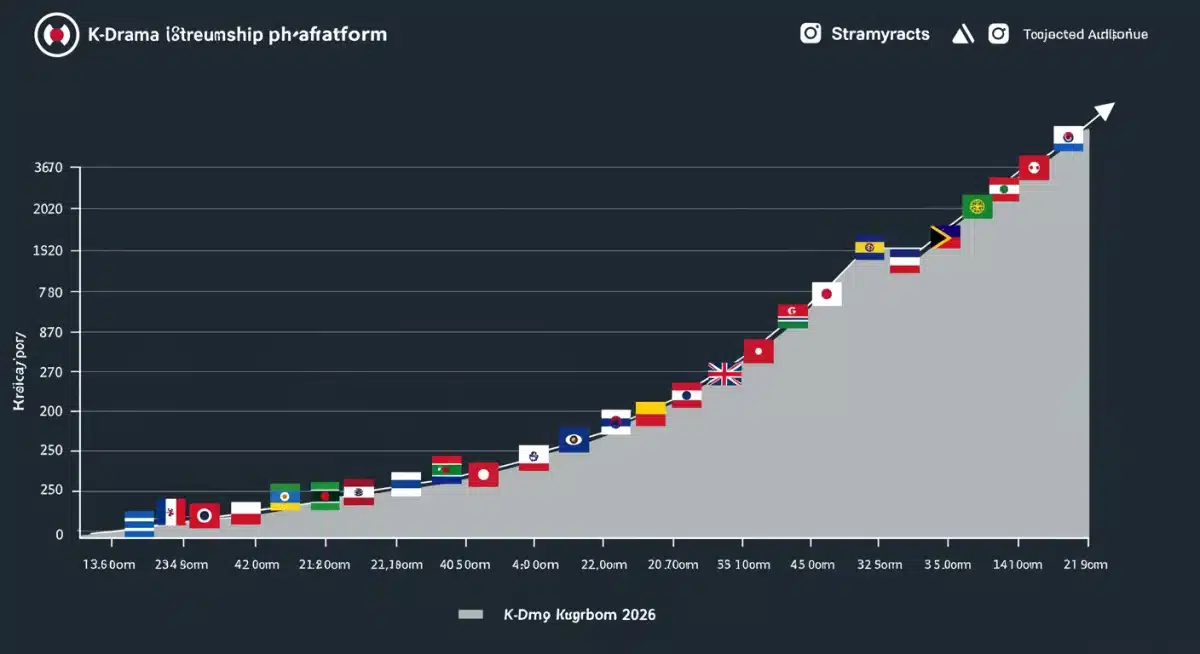
By 2026, expect to see a rich tapestry of K-Drama genres available on U.S. streaming platforms. From psychological thrillers that keep you on the edge of your seat to heartwarming slice-of-life dramas that offer comfort, the range will be unprecedented. This genre expansion is not just about quantity; it’s about quality and depth, ensuring that there’s a K-Drama for every taste, further solidifying their position as a global content powerhouse. This strategic move ensures that the K-Drama Streaming Trends continue to innovate and captivate diverse audiences worldwide.
Trend 3: Strategic Pursuit of Global Appeal and Localization
The third significant trend that will define K-Drama original productions by U.S. streaming giants in 2026 is the strategic pursuit of global appeal, coupled with sophisticated localization efforts. It’s no longer enough for a K-Drama to be popular in Asia; the goal is to create content that resonates deeply with audiences across continents, transcending linguistic and cultural barriers. This involves a multi-pronged approach that begins at the conceptualization stage and extends through production, marketing, and distribution.
One key aspect of this trend is the intentional development of “glocal” narratives – stories that are rooted in Korean culture and identity but explore universal themes and character archetypes that are easily understood and empathized with by a global audience. This might involve storylines that address modern societal challenges, explore complex human relationships, or delve into historical events with universal lessons. The success of shows like “Crash Landing on You” (romance across borders) or “Kingdom” (historical zombie thriller with political intrigue) demonstrates the power of combining unique Korean settings with universally relatable struggles.
Furthermore, U.S. streaming giants are investing heavily in high-quality localization. This goes far beyond simple translation. It includes expert subtitling that captures cultural nuances, professional dubbing in multiple languages with careful casting, and even cultural consultants to ensure that marketing materials and promotional campaigns are sensitive and appealing to specific regional audiences. The aim is to make K-Dramas feel accessible and engaging to viewers regardless of their native language or cultural background, minimizing the perception of “foreignness.” This level of attention to detail in localization is a significant differentiator and a key driver of global success.
Collaboration is another critical element of this trend. We are seeing more partnerships between Korean production houses and international talent, including writers, directors, and even actors. While the core of K-Drama remains authentically Korean, these collaborations can sometimes introduce new perspectives, production techniques, and storytelling approaches that enhance global resonance. This doesn’t mean diluting the Korean essence but rather enriching it through cross-cultural exchange, fostering a truly global creative dialogue. By 2026, it will be common to see Korean directors working with international cinematographers, or Korean writers developing concepts with input from global story editors, all while maintaining the unique K-Drama flair.
Finally, marketing and distribution strategies are becoming increasingly sophisticated. Streaming platforms use their vast data analytics to identify potential global audiences for specific K-Drama titles, tailoring promotional campaigns to target these demographics effectively. This includes leveraging social media trends, partnering with global influencers, and creating immersive digital experiences that draw viewers into the K-Drama universe. The strategic pursuit of global appeal is not a passive hope but an active, data-driven endeavor that ensures K-Dramas reach every corner of the globe, solidifying their status as a universally beloved entertainment form. These advanced strategies are central to the evolving K-Drama Streaming Trends.
The Impact on the Korean Entertainment Industry
These three key trends – skyrocketing investment, genre diversification, and strategic global appeal – are collectively having a transformative impact on the Korean entertainment industry. The influx of foreign capital and the global spotlight have created an unprecedented boom. Production companies are expanding, talent agencies are nurturing a new generation of stars, and the overall quality and ambition of Korean content are reaching new heights. This creates a virtuous cycle: more investment leads to better content, which attracts more global viewers, which in turn justifies even greater investment.
However, this rapid growth also presents challenges. There’s increased pressure on creators to consistently deliver high-quality, globally appealing content. The competition for talent, both in front of and behind the camera, is intensifying. There are also discussions about maintaining the unique cultural identity of K-Dramas amidst global influences. Yet, the Korean industry has consistently shown its resilience and adaptability, often turning challenges into opportunities for innovation. The collaborative nature of these partnerships often means that while U.S. giants provide resources and global reach, Korean creators retain significant creative control, ensuring the authenticity of the storytelling.
The rise of “super-producers” in Korea, production companies that can handle multiple large-scale international projects simultaneously, is another notable outcome. These companies are becoming highly sophisticated, adept at navigating international co-production agreements, managing complex budgets, and understanding global audience preferences. This professionalization of the industry further solidifies Korea’s position as a global content hub, not just for K-Dramas but for other forms of entertainment as well.
The Future Landscape: Beyond 2026
Looking beyond 2026, these K-Drama Streaming Trends are likely to continue and evolve. We might see even deeper integration, with U.S. streaming giants establishing more permanent production facilities in Korea or forming joint ventures with major Korean entertainment conglomerates. The line between “Korean” and “international” productions may blur further, leading to truly hybrid content that draws on the best of both worlds.
The role of technology will also become increasingly prominent. Virtual production, AI-assisted writing, and advanced analytics for audience engagement will likely shape how K-Dramas are made and marketed. Interactive storytelling, where viewers can make choices that influence the plot, could become a new frontier, leveraging the innovative spirit of both the Korean tech and entertainment sectors. Furthermore, the success of K-Dramas will undoubtedly inspire other regional content creators to seek similar global partnerships, potentially opening up new avenues for diverse storytelling from around the world.

The competition among streaming services for exclusive K-Drama content will remain fierce, driving up the quality and quantity of original productions. This benefits not only the platforms but, more importantly, the global audience who will have an ever-increasing array of high-quality, diverse, and engaging K-Dramas to choose from. The cultural exchange fostered by this global phenomenon will also continue to grow, leading to greater understanding and appreciation of Korean culture worldwide.
Conclusion: K-Drama’s Global Ascent Solidified
The trajectory of K-Drama original productions by U.S. streaming giants towards 2026 is one of undeniable growth, innovation, and global integration. The three key trends – skyrocketing investment, diversification of genres, and strategic pursuit of global appeal – are not isolated phenomena but interconnected forces driving K-Drama to new heights. These trends signify a maturation of the global entertainment market, where compelling storytelling, regardless of its origin, can find a worldwide audience with the right platform and investment.
U.S. streaming giants have moved beyond merely distributing K-Dramas; they are now instrumental in their creation, acting as catalysts for an industry that was already brimming with talent and potential. This partnership is proving to be mutually beneficial: the streaming platforms gain exclusive, high-demand content that attracts and retains subscribers, while the Korean entertainment industry receives the financial backing and global reach necessary to expand its creative horizons and impact.
For viewers, this means an exciting future filled with a richer, more diverse, and visually stunning array of K-Dramas. Whether you’re a long-time fan or a newcomer to the captivating world of Korean television, the coming years promise an unprecedented level of quality and innovation. The evolution of K-Drama Streaming Trends is not just a passing fad; it’s a fundamental shift in how global entertainment is produced and consumed, with K-Dramas firmly positioned at the forefront of this exciting new era. As 2026 approaches, the world will continue to watch, eagerly anticipating the next wave of Korean storytelling that will undoubtedly capture hearts and minds across the globe.
The cultural impact of K-Dramas, amplified by these trends, extends far beyond mere entertainment. They serve as cultural ambassadors, introducing global audiences to Korean language, traditions, food, and societal nuances. This soft power further strengthens Korea’s position on the world stage, fostering greater international interest and understanding. The synergy between Korean creativity and U.S. streaming platforms is creating a powerful engine for cultural exchange, proving that compelling stories truly know no borders.
In conclusion, the future of K-Dramas is bright, dynamic, and globally interconnected. The strategic decisions made by U.S. streaming giants today are laying the groundwork for a content landscape in 2026 where K-Dramas are not just popular, but essential to the global streaming experience. Prepare to be entertained, enlightened, and utterly captivated by the next generation of Korean original productions.