
The global streaming landscape is a dynamic arena, constantly reshaped by strategic content investments and evolving consumer preferences. In this intricate ecosystem, Netflix has consistently demonstrated its prowess in identifying and capitalizing on emerging trends. One of the most significant and talked-about moves in recent memory is Netflix’s substantial investment in K-Dramas, particularly the projected capital allocation for Q1 2026. This article delves deep into the potential ramifications of this strategic play, analyzing its profound Netflix K-Drama Impact on the U.S. streaming market share, subscriber dynamics, and the broader competitive environment. We aim to provide a comprehensive industry analysis, dissecting the various facets of this ambitious content strategy and its anticipated outcomes.
Korean dramas, or K-Dramas, have transcended their regional origins to become a global cultural phenomenon. Their compelling narratives, high production quality, unique storytelling, and charismatic actors have captivated audiences worldwide. Netflix, recognizing this burgeoning appeal, has been at the forefront of bringing K-Dramas to an international audience. However, the Q1 2026 investment signals a new level of commitment, indicating a strategic intent to solidify its position and potentially disrupt the U.S. streaming market in unprecedented ways.
The Ascendance of K-Dramas: A Global Phenomenon
Before dissecting the specific impact of Netflix’s Q1 2026 investment, it’s crucial to understand the trajectory of K-Dramas. What began as a niche interest has blossomed into a mainstream entertainment staple, particularly over the last decade. The ‘Hallyu’ or Korean Wave, encompassing K-Pop, K-Beauty, and K-Dramas, has steadily gained momentum, breaking down linguistic and cultural barriers. Platforms like Netflix have played a pivotal role in this global expansion, providing accessibility and sophisticated recommendation algorithms that introduce these shows to new viewers.
The appeal of K-Dramas is multifaceted. They often explore universal themes of love, family, ambition, and societal challenges, making them relatable across diverse demographics. Furthermore, their production values are often on par with, if not exceeding, many Western productions, offering visually stunning cinematography and elaborate sets. The episodic nature, often with a clear beginning, middle, and end within a single season, also appeals to viewers seeking complete narratives rather than open-ended, multi-season commitments.
In the U.S. market, the growth of K-Drama viewership has been exponential. Data from various analytics firms consistently shows an upward trend in consumption, particularly among younger demographics and multicultural audiences. This increasing appetite has not gone unnoticed by streaming giants, and Netflix’s strategic moves are a direct response to this evolving consumer landscape. The Q1 2026 investment is not merely about adding more content; it’s about cementing a leadership position in a rapidly expanding and highly engaged segment of the entertainment market.
Netflix’s Strategic Imperative: Why K-Dramas Now?
Netflix’s decision to significantly ramp up its K-Drama investment in Q1 2026 is driven by several strategic imperatives. Firstly, it’s a clear differentiator in a highly saturated streaming market. While competitors like Disney+, Max, and Amazon Prime Video also offer international content, Netflix has arguably cultivated the strongest association with high-quality, diverse K-Drama offerings. By doubling down on this genre, Netflix aims to strengthen its unique selling proposition and attract subscribers who are specifically seeking this type of content.
Secondly, K-Dramas have proven to be exceptionally effective in subscriber acquisition and retention. Shows like ‘Squid Game,’ ‘Extraordinary Attorney Woo,’ and ‘The Glory’ have not only garnered massive global viewership but have also become cultural touchstones, driving significant buzz and drawing new subscribers to the platform. The viral nature of many K-Dramas, fueled by social media and word-of-mouth, creates a powerful organic marketing engine. The Q1 2026 investment is likely targeted at replicating and amplifying these successes, ensuring a continuous pipeline of compelling K-Drama content to keep existing subscribers engaged and attract new ones.
Thirdly, the cost-effectiveness of K-Drama production, when compared to high-budget Hollywood blockbusters, offers an attractive return on investment. While some K-Dramas can be expensive, the overall production costs often provide more content hours for a given budget, allowing Netflix to diversify its offerings without breaking the bank. This efficient content strategy is crucial in an environment where content spending is under increasing scrutiny.
Lastly, the investment signals Netflix’s long-term vision for global cultural integration. By investing heavily in content from diverse regions, Netflix positions itself not just as a content distributor, but as a cultural bridge. This strategy resonates with an increasingly globalized audience that values diversity and authenticity in their entertainment choices. The Netflix K-Drama Impact extends beyond mere viewership; it’s about shaping cultural narratives and fostering cross-cultural appreciation.
Projected Impact on U.S. Streaming Market Share
The Q1 2026 K-Drama investment is expected to have a tangible and significant impact on Netflix’s U.S. streaming market share. While precise figures are speculative, several trends suggest a positive trajectory for the streaming giant. The U.S. market, though mature, still offers opportunities for growth, particularly by tapping into underserved or rapidly growing niche segments.
One of the primary impacts will be on subscriber acquisition. A robust pipeline of highly anticipated K-Dramas can act as a powerful magnet for new subscribers, especially those who may not have previously considered Netflix or who are looking for a specific type of content not readily available elsewhere. This is particularly true for younger demographics and multicultural households, where K-Drama consumption is already high and continues to grow. By consistently delivering fresh, high-quality K-Dramas, Netflix can convert these viewers into loyal subscribers.
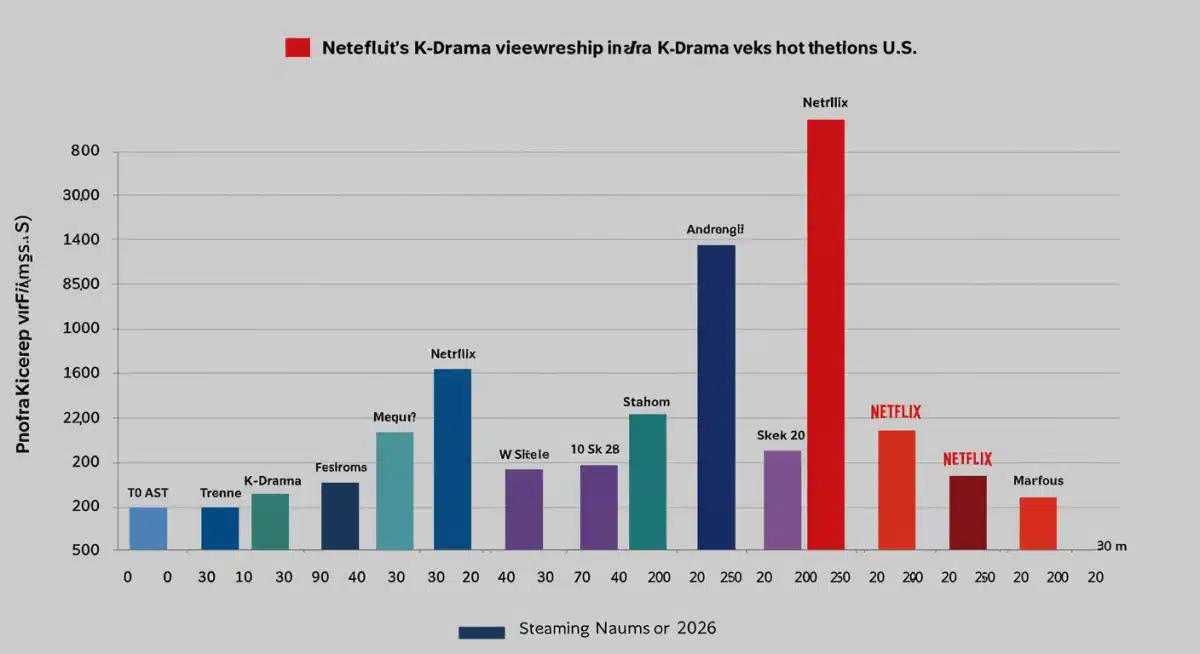
Furthermore, the investment will bolster subscriber retention. In an era of ‘churn,’ where subscribers frequently jump between platforms, a strong and diverse content library is paramount. K-Dramas, with their often serialized nature and dedicated fandoms, encourage binge-watching and long-term engagement. By offering a continuous stream of new seasons and original K-Drama productions, Netflix can reduce churn rates and ensure subscribers remain committed to its platform. This sustained engagement directly translates into a more stable and growing market share.
The competitive landscape will also feel the ripple effects. Competitors, seeing Netflix’s success with K-Dramas, may attempt to emulate this strategy by increasing their own investments in international content, particularly from South Korea. However, Netflix has a significant head start, having built strong relationships with Korean production houses and talent over several years. This established network provides Netflix with a competitive advantage, allowing it to secure exclusive deals and attract top-tier creators. The Q1 2026 investment solidifies this advantage, making it harder for rivals to catch up quickly.
Moreover, the increased K-Drama offerings could lead to a ‘halo effect,’ where viewers initially drawn in by K-Dramas discover and engage with other genres and international content available on Netflix. This cross-pollination of viewership can broaden the appeal of Netflix’s entire library, further strengthening its market position. The Netflix K-Drama Impact is not confined to a single genre; it has the potential to elevate the entire platform’s perceived value.
Content Strategy and Production Partnerships
The success of Netflix’s K-Drama strategy hinges not just on financial investment, but also on astute content strategy and robust production partnerships. Netflix has moved beyond merely licensing existing K-Dramas; it has heavily invested in original productions, often collaborating directly with prominent Korean writers, directors, and production companies. This approach allows for greater creative control, ensures exclusivity, and caters to specific global audience tastes.
The Q1 2026 investment will likely see an expansion of these original productions, potentially exploring new genres within the K-Drama umbrella, such as historical epics, sci-fi thrillers, or even more experimental formats. This diversification can attract an even broader audience, moving beyond the traditional romantic comedy or melodrama genres that initially popularized K-Dramas. Netflix’s data-driven insights into viewer preferences will undoubtedly inform these content choices, ensuring that the investment is strategically allocated to maximize impact.
Furthermore, Netflix’s global infrastructure allows for seamless localization, providing subtitles and dubbing in numerous languages. This accessibility is a critical factor in the global appeal of K-Dramas. The Q1 2026 investment will likely include enhanced localization efforts, ensuring that K-Dramas are not only produced at a high standard but also reach and resonate with audiences in their native languages, further amplifying their reach and cultural penetration.
Challenges and Considerations
While the prospects for Netflix’s K-Drama investment appear bright, there are also challenges and considerations that need to be addressed. One significant challenge is the rising cost of production. As K-Dramas become more popular, the demand for talent, both in front of and behind the camera, increases, potentially driving up production budgets. Netflix will need to carefully balance investment with sustainable returns.
Another consideration is content fatigue. While K-Dramas are popular, an oversaturation of content, or a decline in quality, could lead to viewer fatigue. Netflix will need to maintain a high bar for its K-Drama selections and original productions, ensuring that each new release offers something fresh and engaging. The Q1 2026 investment must be accompanied by rigorous quality control and a commitment to innovative storytelling.
The competitive response is also a factor. As Netflix elevates the profile of K-Dramas, other streaming platforms may intensify their efforts to acquire or produce similar content. This could lead to bidding wars for talent and intellectual property, potentially increasing costs and making it harder for Netflix to maintain its dominant position. However, Netflix’s established relationships and brand recognition in the K-Drama space provide a strong defensive moat.
Finally, cultural nuances and censorship in different regions can pose challenges. While K-Dramas are globally appealing, certain themes or narratives might not resonate universally or could face restrictions in specific markets. Netflix will need to navigate these cultural sensitivities carefully, ensuring that its content strategy is both globally ambitious and locally informed. The long-term Netflix K-Drama Impact relies on this delicate balance.
The Broader Economic and Cultural Implications
Beyond the immediate impact on Netflix’s market share, the Q1 2026 K-Drama investment carries broader economic and cultural implications. Economically, it represents a significant boost to the South Korean creative industry, fostering talent development, job creation, and increased international recognition for Korean culture. This influx of capital and global exposure can further solidify South Korea’s position as a major cultural exporter.
Culturally, the sustained investment in K-Dramas by a global powerhouse like Netflix contributes to greater cross-cultural understanding and appreciation. Exposure to diverse narratives and lifestyles can break down stereotypes and foster empathy among viewers. K-Dramas often subtly weave in aspects of Korean history, social issues, and contemporary life, offering a window into a different culture for millions of viewers worldwide. This cultural exchange is a powerful, albeit often overlooked, benefit of such strategic content investments.

Moreover, the success of K-Dramas on Netflix can inspire other regions to invest in and promote their own local content on a global stage. This could lead to a more diversified and vibrant global entertainment landscape, moving beyond the traditional dominance of Western content. Netflix, through its K-Drama strategy, is not just investing in a genre; it’s investing in a model for global content production and distribution that empowers diverse voices and stories.
Future Outlook and Predictions
Looking ahead, the Q1 2026 K-Drama investment is likely to be a cornerstone of Netflix’s global content strategy for years to come. We can anticipate several key developments as a result of this intensified focus. Firstly, there will likely be an even greater emphasis on high-budget, cinematic K-Dramas that rival the production quality of Hollywood blockbusters. This could attract even more mainstream viewers and critical acclaim, further elevating the genre’s status.
Secondly, Netflix might explore more interactive K-Drama formats, similar to some of its existing interactive content. This could offer viewers a more immersive and personalized experience, pushing the boundaries of traditional storytelling. Imagine K-Dramas where viewers can choose storylines or character fates, adding another layer of engagement.
Thirdly, the investment could lead to a stronger integration of K-Drama talent and narratives into other Netflix original content. We might see more collaborations between Korean and Western creators, leading to hybrid productions that blend different cultural storytelling traditions. This cross-cultural creative exchange could yield truly innovative and groundbreaking content.
Finally, the long-term Netflix K-Drama Impact is likely to solidify Netflix’s position as the premier destination for international content, particularly from Asia. This strategic advantage will be crucial in a competitive market where content differentiation is key to sustained growth and market leadership. The investment is not just a short-term play for subscriber numbers; it’s a long-term commitment to a content category that has proven its global appeal and continues to grow in influence.
Conclusion
Netflix’s projected Q1 2026 K-Drama investment is a bold and calculated move that underscores the company’s commitment to diverse, high-quality international content. The anticipated impact on the U.S. streaming market share is significant, with projections indicating increased subscriber acquisition and retention, further solidifying Netflix’s dominant position. By leveraging the global appeal of K-Dramas, Netflix is not only expanding its content library but also strategically differentiating itself in a crowded market.
This investment is more than just a financial transaction; it’s a testament to the power of cultural exchange and the universal appeal of compelling storytelling. The ripple effects will be felt across the streaming industry, influencing competitor strategies, boosting the South Korean creative economy, and fostering greater cross-cultural understanding among global audiences. As we move closer to Q1 2026, all eyes will be on Netflix to see how this ambitious K-Drama strategy unfolds and reshapes the future of streaming entertainment. The Netflix K-Drama Impact is set to be a defining narrative in the evolving story of global digital media.